
A message arrives on a paediatric clinic’s WhatsApp number just after nine in the evening. A parent wants to know whether a slot is free before school tomorrow, and whether the clinic is on their insurer’s panel. Nobody reads it until the front desk opens the next morning, by which time the parent has already called a clinic two streets over that happened to pick up.
Clinics, whether a GP practice, a dental surgery, a physiotherapy centre or a traditional Chinese medicine hall, field a steady stream of these logistical questions long before anyone needs to see a doctor. A well-built clinic chatbot can pick up a good share of that volume, but it needs narrower boundaries than the chatbots used in retail or F&B, because the subject matter sits closer to people’s health and their trust in the people treating them.
The Enquiries a Front Desk Fields Every Day
Most of what reception handles has nothing to do with diagnosis. Patients want to know the clinic’s hours, whether a walk-in is possible or an appointment is required, which insurance panels or Medisave schemes apply, roughly what a common procedure costs, and what to bring along: a referral letter, an NRIC, a previous prescription. None of it needs a clinician’s judgement, yet all of it ties up a receptionist who could otherwise be attending to the person standing at the counter. The gap is wider outside office hours too. MOH figures show that of the more than 1,300 CHAS GP clinics in Singapore, only around 500 offer after-office-hours services and just 20 run 24 hours, so a clinic chatbot answering these questions overnight is filling a real gap, not a convenience nobody needed.
Why Clinics Can’t Just Reuse a Retail Chatbot Script
A chatbot built for an online shop can afford a breezy, improvisational tone, and a wrong answer about delivery timing is an inconvenience rather than anything more serious. A chatbot built for a clinic does not get that latitude. Patients read health-adjacent messages more literally, and a bot that hedges, jokes or guesses risks sounding like it is offering a clinical opinion it has no business giving.
The safer approach is a script that stays firmly on administrative ground and says so plainly. A line such as “I can help with bookings, fees and opening hours, but I can’t advise on symptoms or treatment” sets the right expectation early, before a patient has the chance to ask something the bot should never try to answer.
What the Chatbot Can Take Off Reception’s Plate
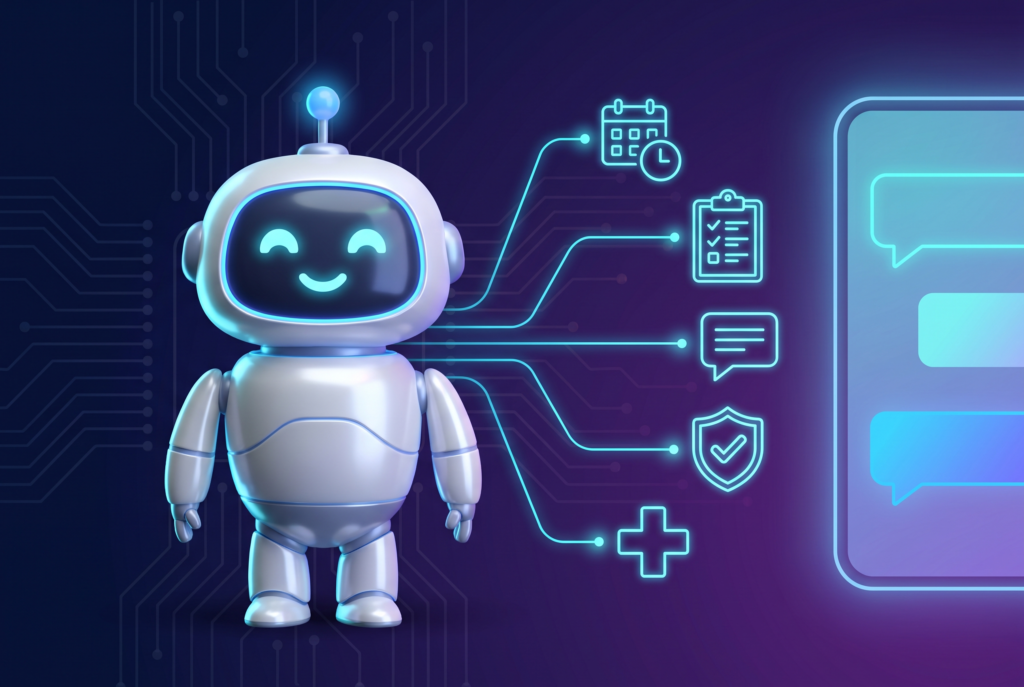
Within those limits, there is still a reasonable amount a bot can handle well, provided it is connected to the clinic’s actual booking system instead of working from a script written once and never updated:
- Checking appointment availability and booking a slot directly against the clinic’s calendar
- Confirming whether a specific insurer, Medisave scheme or company panel is accepted
- Giving fee estimates for common procedures, with a note that final costs depend on the consultation
- Listing the documents a patient should bring for a particular visit type
- Sending appointment reminders and simple pre-visit instructions, such as fasting before a blood test
Where the Chatbot Has to Stop and a Person Takes Over
The moment a message describes a symptom, asks whether something is serious, or requests advice on medication, the bot needs to stop trying to be helpful in the usual sense and hand the conversation to a person instead. The same applies to anything that sounds remotely urgent:
- Any description of symptoms, pain, or how someone is feeling
- Questions about medication dosage, interactions or side effects
- Requests for test results or an interpretation of them
- Anything that reads as a possible emergency
- Billing disputes or complaints about care received
- Questions about a diagnosis or treatment plan already discussed with a clinician
Designing that handoff properly takes the same discipline as deciding when a chatbot should escalate to a support ticket in any other industry, except the stakes for getting the trigger wrong are higher. The message a patient sees during the handover also needs to reassure them that a person is picking it up, not leave them wondering if anyone saw it at all.
Handling Patient Details with the Right Safeguards
The chatbot will inevitably collect personal information: a name, a contact number, sometimes an NRIC to confirm identity. Singapore’s Personal Data Protection Commission publishes advisory guidelines for the healthcare sector on top of the general PDPA, because health-related information carries more weight than an ordinary enquiry and the consequences of mishandling it are more serious.
In practice, that means collecting only what a booking or enquiry genuinely needs, being clear about who the data is shared with when the chatbot runs through a third-party platform, and not keeping conversation transcripts longer than the clinic can justify. A vendor who cannot explain where patient messages are stored and who can see them is not one to build a healthcare chatbot with.
Fitting Into the Clinic’s Existing Systems
The chatbot works best as a front door to systems the clinic already runs instead of a separate tool staff have to check on top of everything else. When a booking made through the chatbot lands straight in the same calendar the front desk uses, nobody has to double-enter it, and nothing falls through the gap between two systems that don’t talk to each other.
None of this replaces a receptionist’s judgement, and it was never meant to. The right chatbot earns its keep by catching the repetitive, administrative half of patient contact, the opening hours, the fees, the booking slots, so that the people at the front desk have more time for the conversations that actually need a person.
If patients are messaging after hours and waiting until the clinic reopens for simple answers, now may be a good time to get in touch and see what a properly scoped chatbot could take off your team’s plate.